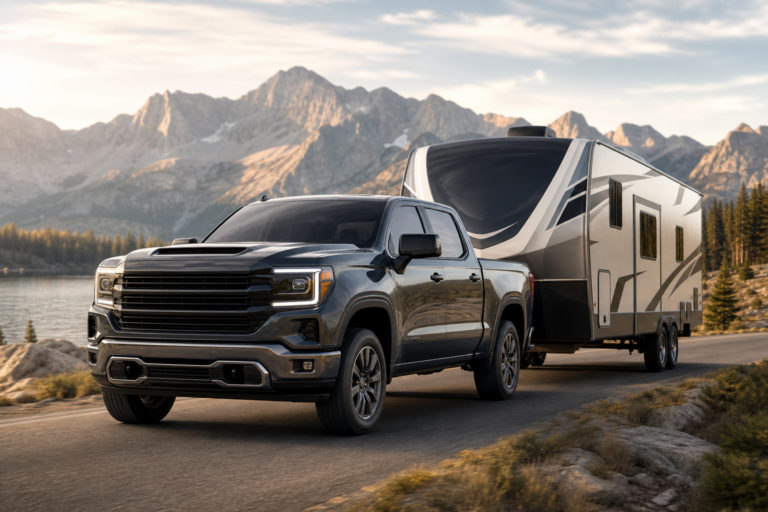
Ford Power Stroke vs Ram Cummins: The 2025 Real-World Comparison
Both trucks are capable. How you drive is what tips the scales.
The spec-sheet argument between Ford’s 6.7L Power Stroke and the Ram’s 6.7L Cummins gets a lot of air time, but it usually skips the thing that bites the most owners: the emissions systems. DPF, EGR, SCR, DEF — that stack of acronyms is where most real-world headaches come from, and it hits daily-driver situations the hardest.
The emissions reality check
Federal aftertreatment requirements layer exhaust gas recirculation (EGR), a diesel particulate filter (DPF), selective catalytic reduction (SCR), and diesel exhaust fluid (DEF) onto every new diesel pickup sold in the US. These systems work well when the truck is used the way it was designed to be used. They cause expensive problems when it isn’t.
Short trips are the enemy. Active DPF regeneration needs exhaust temperatures north of 1,000°F and at least 20 to 30 minutes of continuous highway driving to complete a full cycle. City driving, short commutes, and frequent stop-and-go generate soot without generating enough heat to burn it off. The soot accumulates until a warning light appears, and if that warning is ignored, the truck enters limp mode to protect the engine and filter.
What a regen cycle actually requires
During an active regen, the engine control unit injects extra fuel after combustion to spike exhaust temperatures and incinerate the trapped soot. This is normal, designed behavior. The problem comes when the engine is shut off before the cycle finishes — soot stays in the filter and it loads up a little faster each time. Do enough short trips and the filter fills quicker than the system can clean it.
The practical fix is simple: one 30-minute highway run at a steady cruise, once a week, is usually enough to let passive and active regen do their job. For anyone whose daily commute runs under 10 minutes, that run isn’t optional — it’s maintenance.
Where the specs actually differ
For 2025, the Ford Super Duty’s Power Stroke produces 475 horsepower and 1,050 lb-ft of torque. The Ram HD’s Cummins makes 430 horsepower and 1,075 lb-ft of torque. The Cummins has the narrow torque edge; the Power Stroke wins on horsepower. In real-world towing these figures are close enough that most owners never feel the gap.
Fuel economy is where the Power Stroke consistently pulls ahead — it returns better mpg in most independent comparisons. The Cummins counters with parts cost and architecture. The inline-6 design has fewer moving parts than a V-configuration, which compounds in your favor at high mileage. Parts are cheaper, the aftermarket is deeper, and the engine is more approachable if you do your own work.
The transmission picture in 2025
This is where things shifted meaningfully this year.
Ford’s 10R140 10-speed has well-documented trouble spots. The C-D-F drum bushing is the most commonly reported failure — it works loose under load. The valve body uses aluminum bores prone to wear, and the oil pump loses pressure at high RPM, causing erratic shifts under hard use. These issues were most concentrated in 2020–2023 builds. The redesigned Gen 2 unit for 2024 onward addressed the bushing failure and revised the valve body, but the transmission still runs hot under sustained towing and rewards owners who stay on fluid change intervals. Early Gen 2 reports are more positive, though the long-term record isn’t fully written yet.
Ram replaced the old 68RFE entirely for 2025. The new unit is a ZF-sourced 8-speed automatic badged PowerLine. Real-world testing — including hauling roughly 19,000 pounds up the Davis Dam grade — found the shifting logic intelligent and the overall experience almost unremarkable, which is exactly the praise you want from a work transmission. It holds gears through turbo spool-up rather than hunting for ratios under load. Too new for long-term data, but ZF’s reputation across demanding applications is solid, and the previous gearbox set a very low bar.
Long-term ownership: what to actually budget for
Both trucks will cost money at higher mileage if the emissions systems are neglected. EGR cooler failures, DPF clogs, NOx sensor faults, and SCR system problems are documented across both platforms. SCR replacement on a heavy-duty truck can run several thousand dollars. DEF quality matters too — contaminated fluid damages the dosing injector.
Cummins holds the edge on aftermarket depth and parts pricing. That advantage compounds over a decade of ownership. Power Stroke aftermarket support has grown considerably, but for long-term keepers and DIY owners, Cummins is still the easier engine to live with economically.
Which truck fits which buyer
The Ram with the Cummins makes the most sense for long-term ownership, DIY maintenance, or anyone who wants the most proven diesel engine in this class with a decade-plus of ownership in mind. The 2025 ZF transmission finally gives it a gearbox worth recommending without hedging.
The Ford Super Duty with the Power Stroke makes more sense if horsepower and highway fuel economy are priorities, or if Ford’s dealer footprint is more convenient. The Gen 2 10-speed is a meaningful step forward from early builds, and the Power Stroke’s throttle response and top-end pull are genuine strengths.
What damages both trucks is the same thing: suburban duty cycles with no highway miles. Neither DPF system was designed for 10-minute school-run duty. Use either of these trucks like a truck — regular loads, highway time, consistent fluid service — and they’ll run a long time. Use one as a grocery-getter that never gets hot enough to finish a regen and you’re buying an expensive emissions repair.
Sources
- thedrive.com
- fordauthority.com
- dieselarmy.com
- nextgendiesel.com
- dpfguys.com
- thedieseldudes.com
- prosourcediesel.com
Related Articles