Fueling a Truck and Trailer: How to Find RV-Friendly Gas Stations on Any Road Trip
Stop Hunting for Regular Gas Stations — Go to Truck Stops Instead
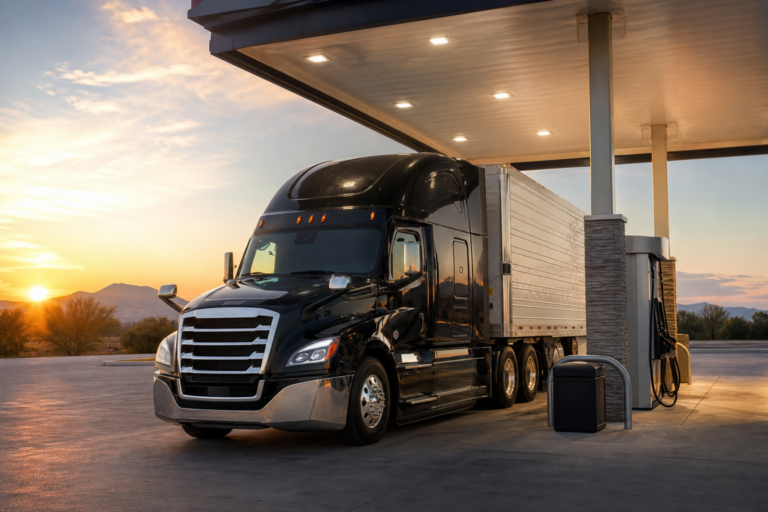
If you’ve been trying to find regular gas stations with enough room for a truck and 36-foot trailer, you’re solving the wrong problem. The answer is truck stops and travel centers. They’re built for big rigs. The lanes are wide, the fuel islands have pull-through access, and you won’t spend 20 minutes doing a 14-point turn just to reach the pump.
The chains most RVers rely on are Flying J, Pilot, and Love’s. Flying J and Pilot — now largely combined under the Pilot Flying J brand — often have dedicated RV lanes separate from both the car pumps and the commercial truck lanes. Those RV lanes carry gas and diesel, sometimes propane, and frequently water and a dump station too. Love’s works well if you use the end pumps and swing wide on entry.
Apps That Cut Down the Pre-Planning Time
Satellite view in Google Maps is valid for scoping out unfamiliar stations. But it’s slow. These apps do the same job faster:
- The Pilot Flying J app — shows all locations, flags which ones have dedicated RV lanes and amenities, and displays current fuel prices. Filter by services before you leave the campsite.
- Allstays Camp & RV — strong for routing a whole trip around truck stops and overnight parking. Users add notes on individual locations, so you get real-world feedback on lane size and ease of access.
- GasBuddy — useful for comparing fuel prices along a corridor. Its RV-specific filtering is limited, so treat it as a price tool rather than an access planner for big rigs.
For a long run like Florida, it’s worth sitting down the night before and plotting two or three confirmed truck stops per leg. That takes the scramble out of the equation entirely.
Fill Up Before You Think You Need To
Half a tank is the cue to start looking. At a quarter tank in a rural stretch, your options thin out fast, and you end up at whatever station you can reach — often exactly the cramped lot you’d never have chosen otherwise. Anxiety about running low is what puts people into bad situations.
Know your next two stops before you leave the current one. That’s the whole strategy.
On-Site: Check the Exit Before You Pull In
At any unfamiliar station, do a slow pass first. Look at the island length, the entry radius, and the exit. Getting in is usually the easy part. Getting out with a 36-foot trailer is where people get stuck. Know where you’re going before you’re committed to the lot.
If you need to park across the back and approach the pump from an angle, do it. Other drivers understand. You’re not obligated to fit into the footprint a passenger car uses. Thirty seconds of planning at the entrance saves a long, miserable backup in a tight lot.
Why Diesel Owners Have It Easier at the Pump
The fueling situation really is simpler with a diesel truck — and the main reason is infrastructure, not fuel economy.
Diesel trucks can use the commercial lanes at any travel center. Those are the wide lanes built for 18-wheelers: pull-through access, high-flow pumps, room to maneuver without drama. Gas pumps are sized for passenger cars. Tighter islands, smaller canopies, lots designed for a 15-foot vehicle, not a 60-foot combination. That mismatch is exactly what you’ve been fighting.
Better range is the other advantage. Diesel trucks generally get better fuel economy while towing, which means fewer stops per trip. On a long haul to Florida, fewer stops compounds into less time wasted and less stress overall.
The trade-off is real cost. Diesel Super Duty trucks carry a significant price premium at purchase, and diesel fuel has historically priced above gasoline — though that gap shifts. If you’re doing a handful of trips a year, it’s hard to justify the switch purely on fueling convenience. If you’re towing heavily and frequently, especially with grades involved, the math changes.
The 7.3L Godzilla: Capable, but Know Your Terrain
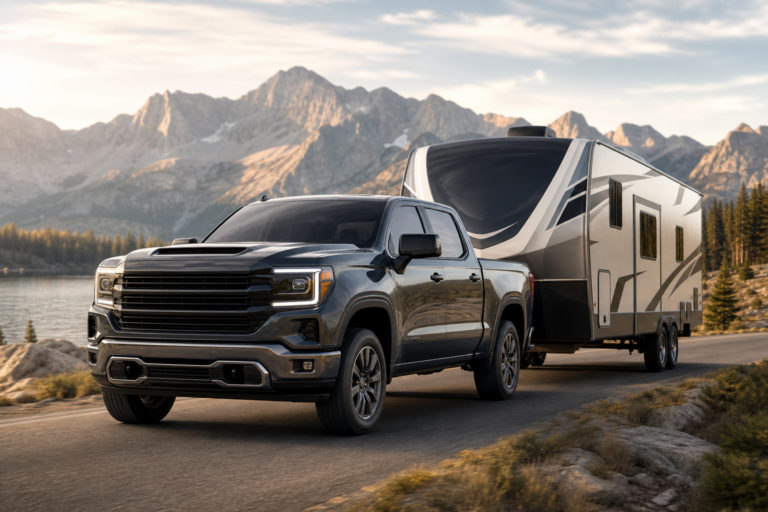
The 7.3L gas V8 handles a 36-footer fine on flat roads. The slow-uphill experience is real and normal — most owners towing in the 8,000–10,000 pound range report roughly 8 to 11 mpg while towing, with flat terrain and steady speeds landing toward the higher end. Grades knock the number down and increase how often you’re stopping.
A Gulf Coast run to Florida is mostly flat. That’s a different fuel consumption picture than crossing mountain ranges. Know the terrain before you set your stop intervals and adjust accordingly.
The engine isn’t the weak link in this setup. The fueling infrastructure for gas trucks is — and steering toward truck stops with RV lanes handles that problem, whatever’s under the hood.
Sources
- rvingknowhow.com
- rvlife.com
- rvlifestyle.com
- gasbuddy.com
- ford-trucks.com
- cars.com
- keepyourdaydream.com
- nirvc.com
Related Articles